Design Architecture of Altik Cents (ALTK)
A Thoughtful Design of Technology, Ecosystem, and Experience - Altik Cents (ALTK) is designed as a lightweight, modular digital asset ecosystem built on Binance Smart Chain (BEP-20).
The design philosophy goes beyond visual interfaces and focuses on technical efficiency, ecosystem interoperability, and transparent on-chain behavior.
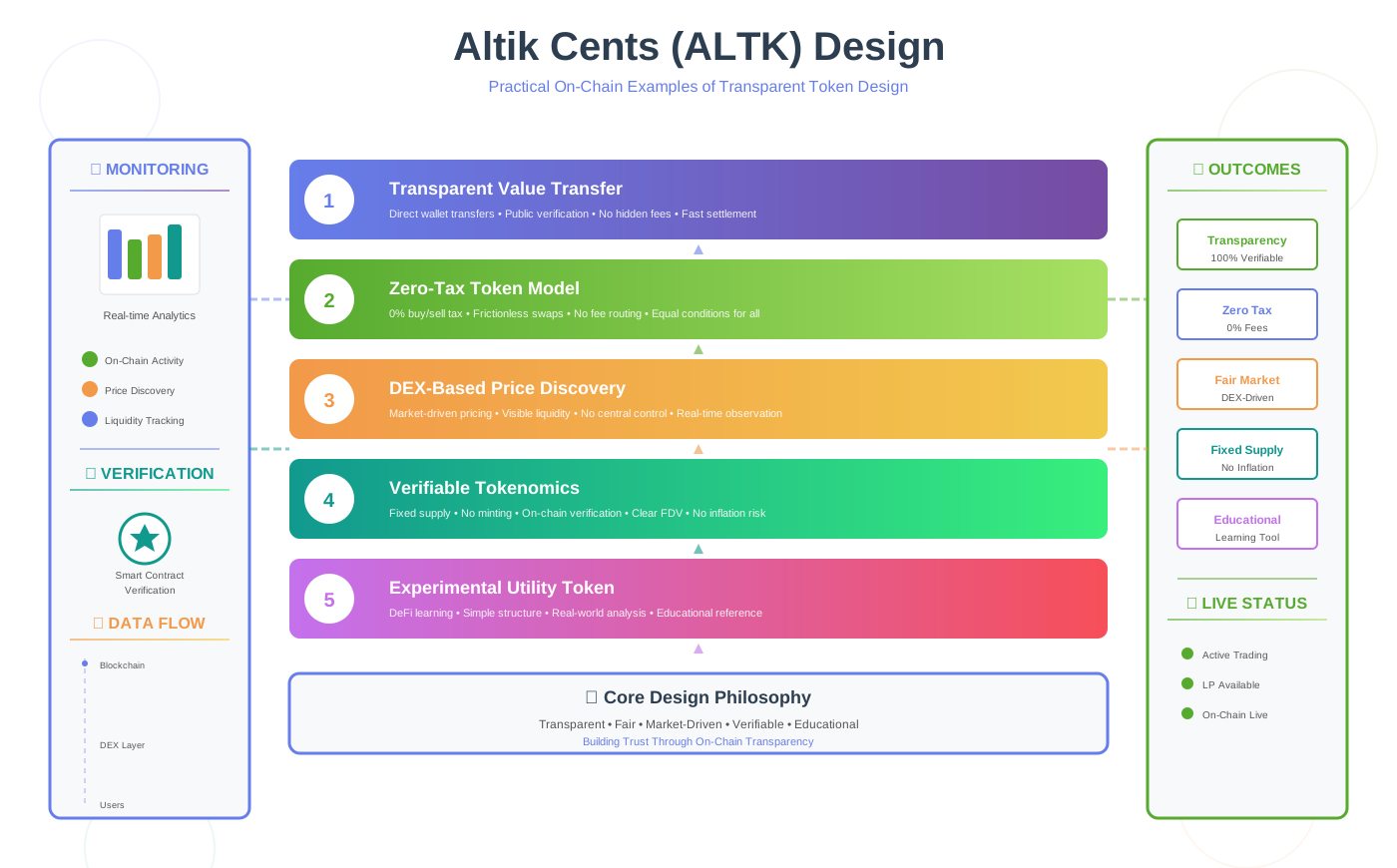
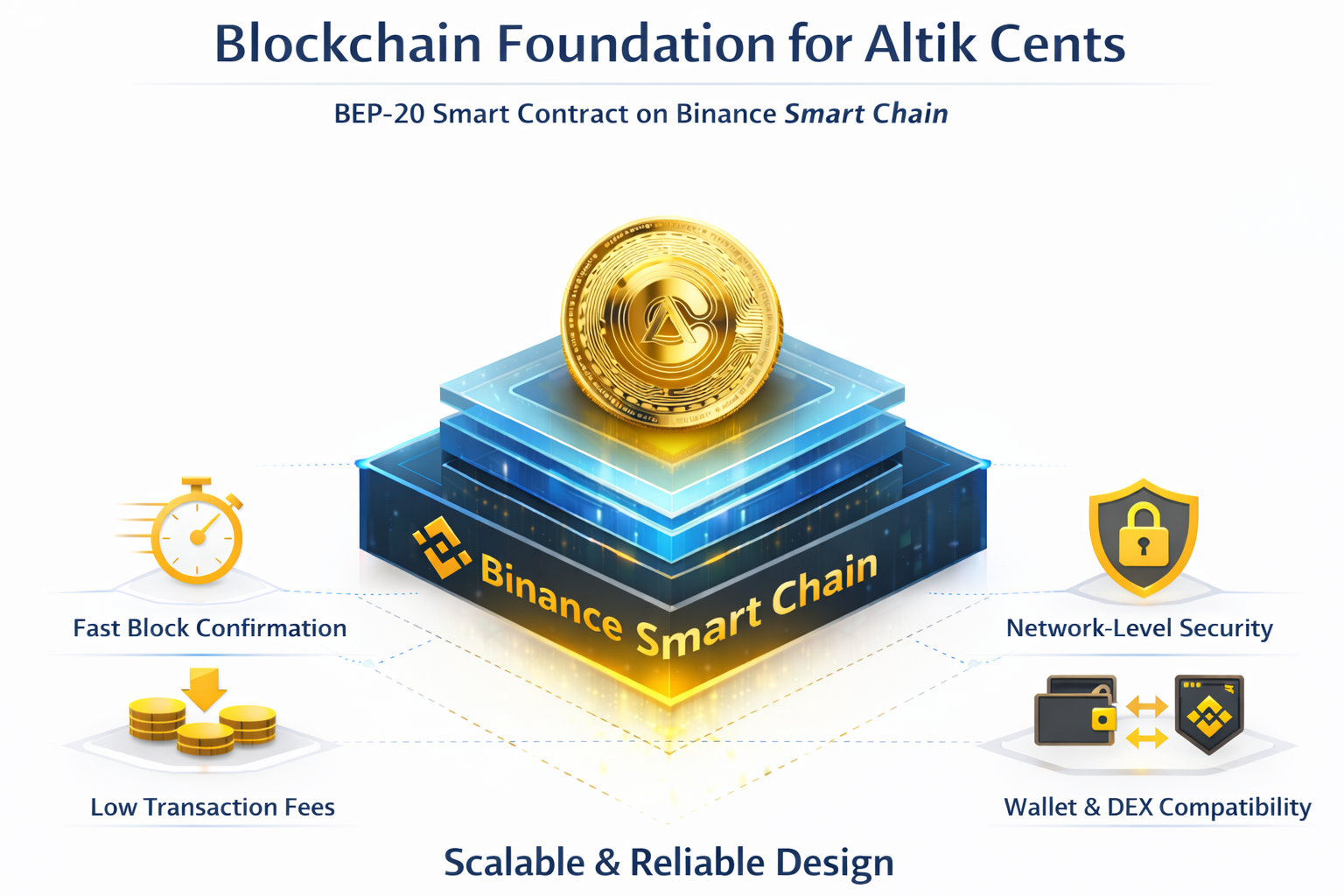
1. Technical Design Overview - Blockchain Foundation
Altik Cents is implemented as a BEP-20 smart contract on Binance Smart Chain, allowing it to inherit:
Fast block confirmation
Low transaction fees
Network-level security
Broad wallet and DEX compatibility
This design avoids unnecessary complexity while ensuring scalability and reliability.
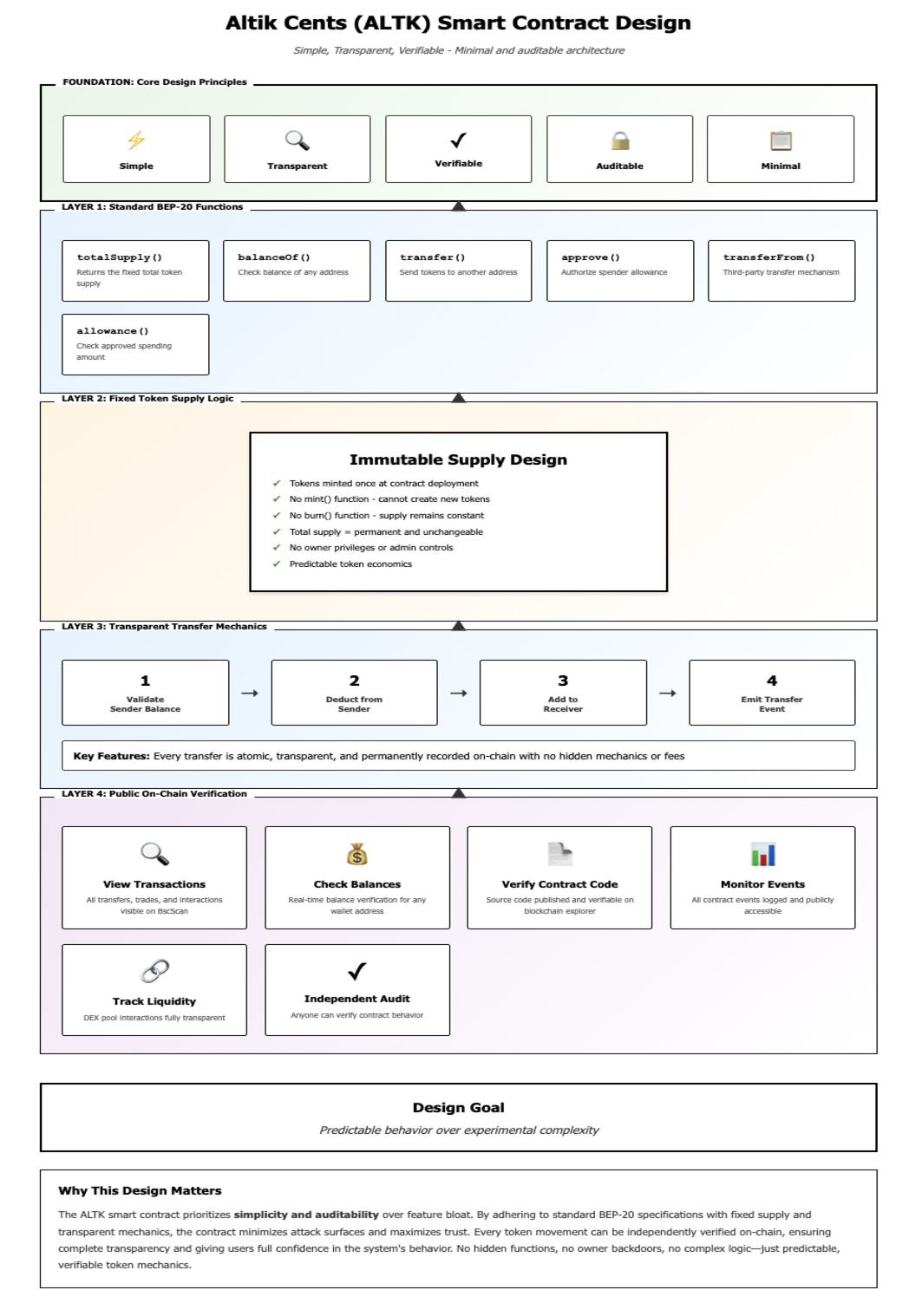
2. Smart Contract Design - Simple, Transparent, Verifiable
The ALTK smart contract follows a minimal and auditable design, focusing on:
Standard BEP-20 functions
Fixed token supply logic
Transparent transfer mechanics
Public on-chain verification
All token activity—transfers, trades, and liquidity interactions—can be independently verified using blockchain explorers.
Design goal:
Predictable behavior over experimental complexity.
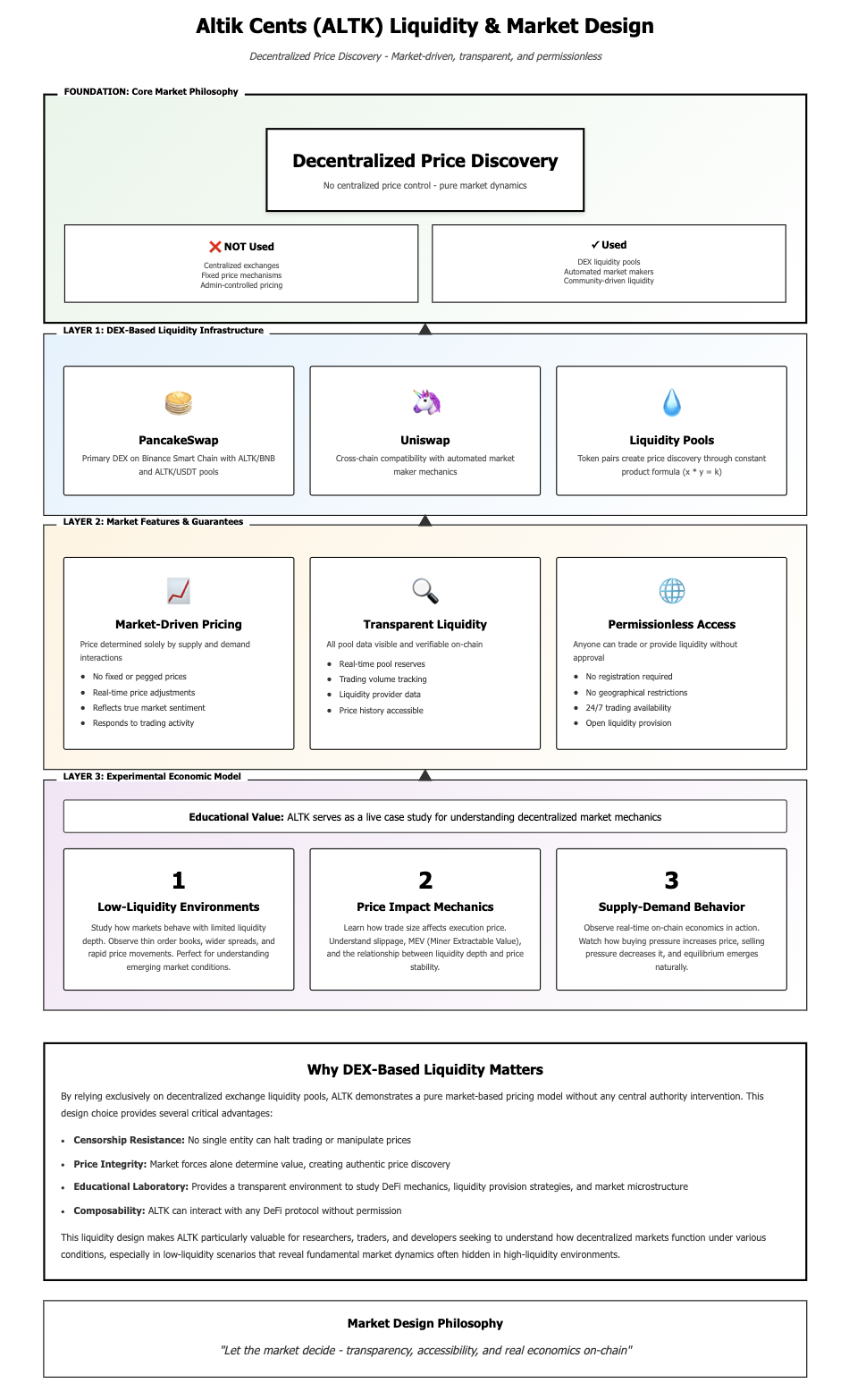
3. Liquidity & Market Design - Decentralized Price Discovery
ALTK uses DEX-based liquidity pools for price discovery rather than centralized price control.
This ensures:
Market-driven pricing
Transparent liquidity behavior
Permissionless access to trading
Liquidity design allows ALTK to function as an experimental economic model, useful for understanding:
Low-liquidity environments
Price impact mechanics
Supply–demand behavior on-chain
4. Ecosystem Design - Modular & Interoperable
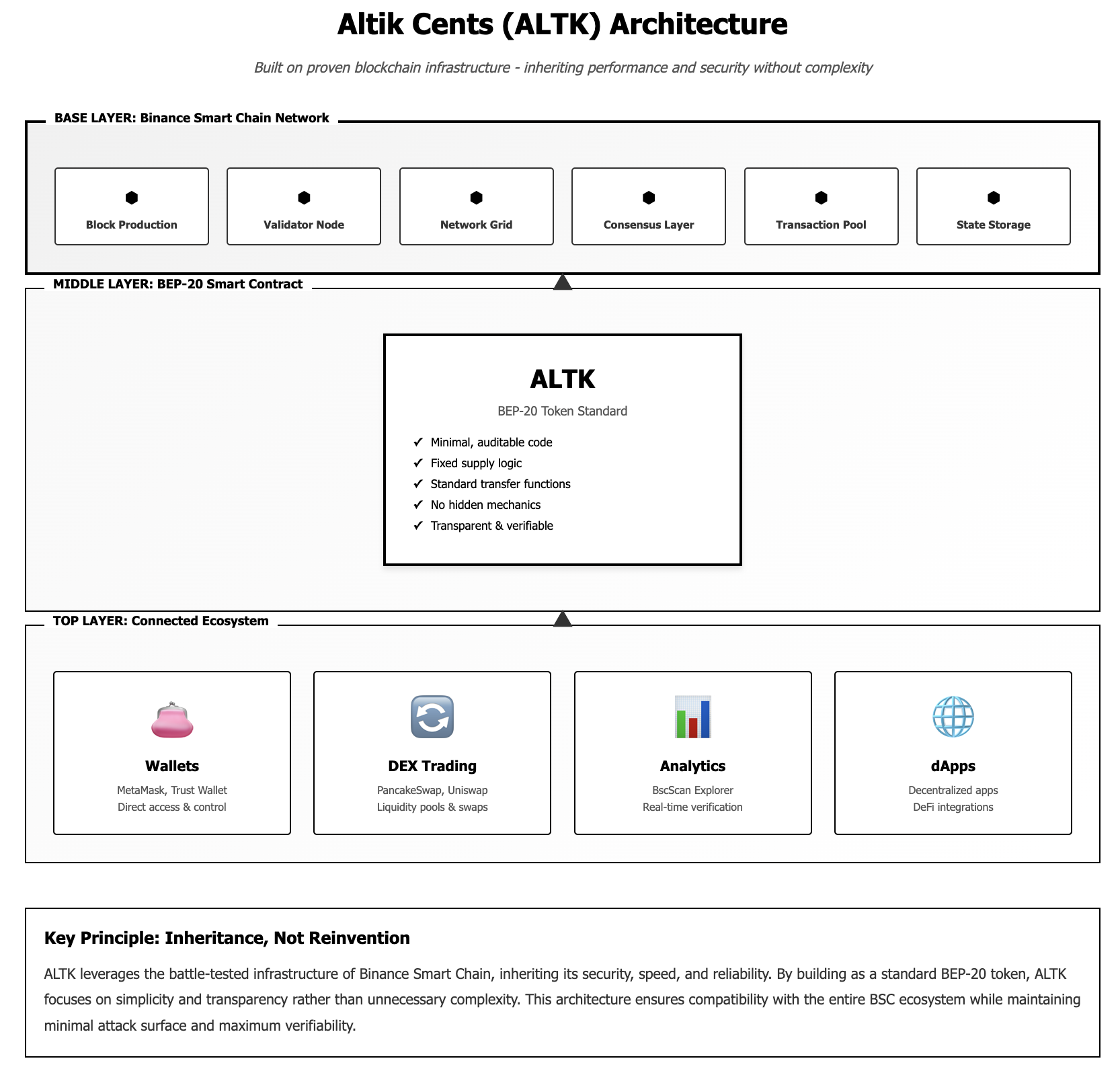
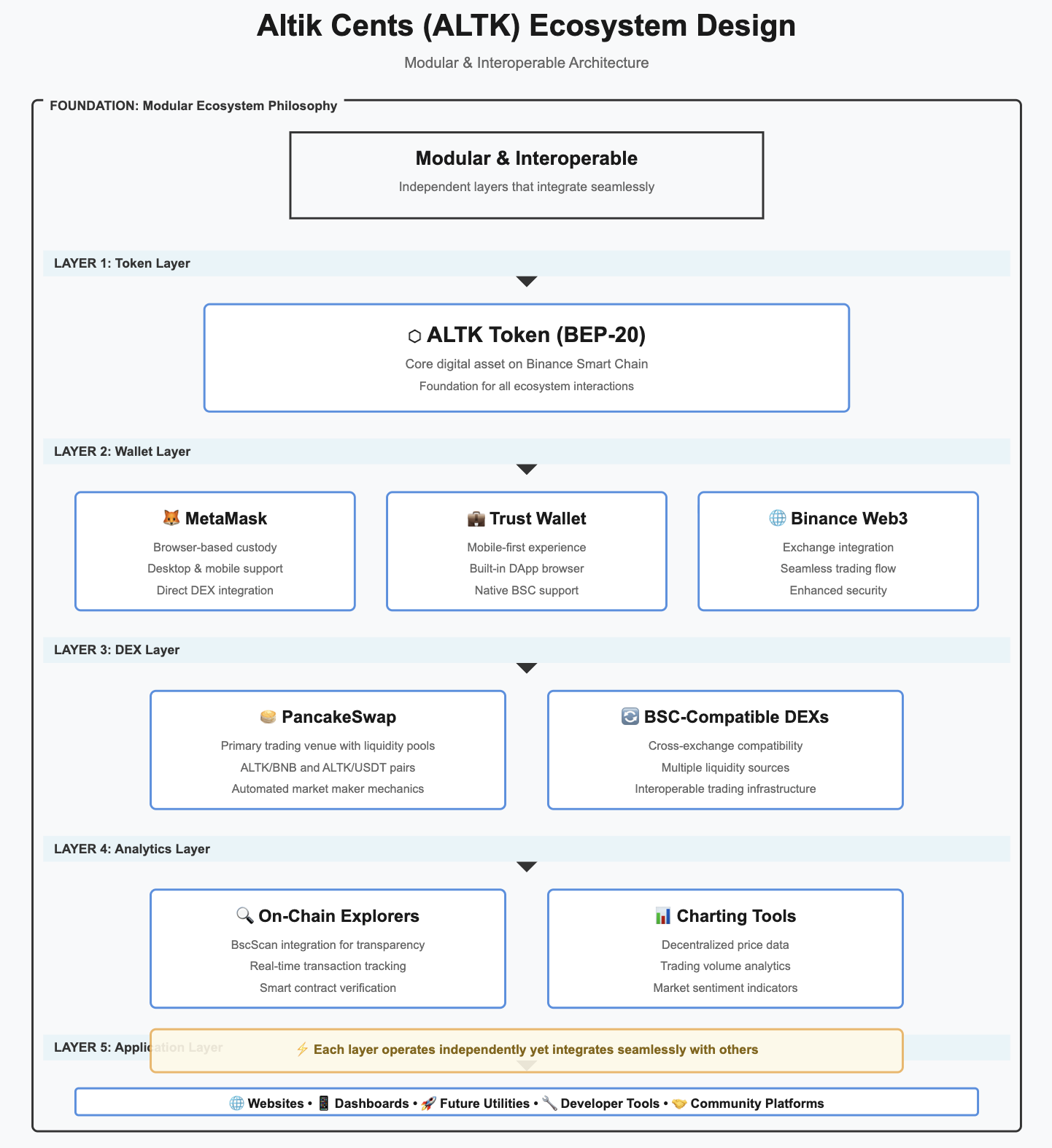
The Altik Cents ecosystem is designed as a set of interoperable layers:
Token Layer: ALTK (BEP-20)
Wallet Layer: MetaMask, Trust Wallet, Binance Web3 Wallet
DEX Layer: PancakeSwap and BSC-compatible exchanges
Analytics Layer: On-chain explorers and decentralized charting tools
Application Layer: Websites, dashboards, and future utilities
Each layer operates independently yet integrates seamlessly with the others.
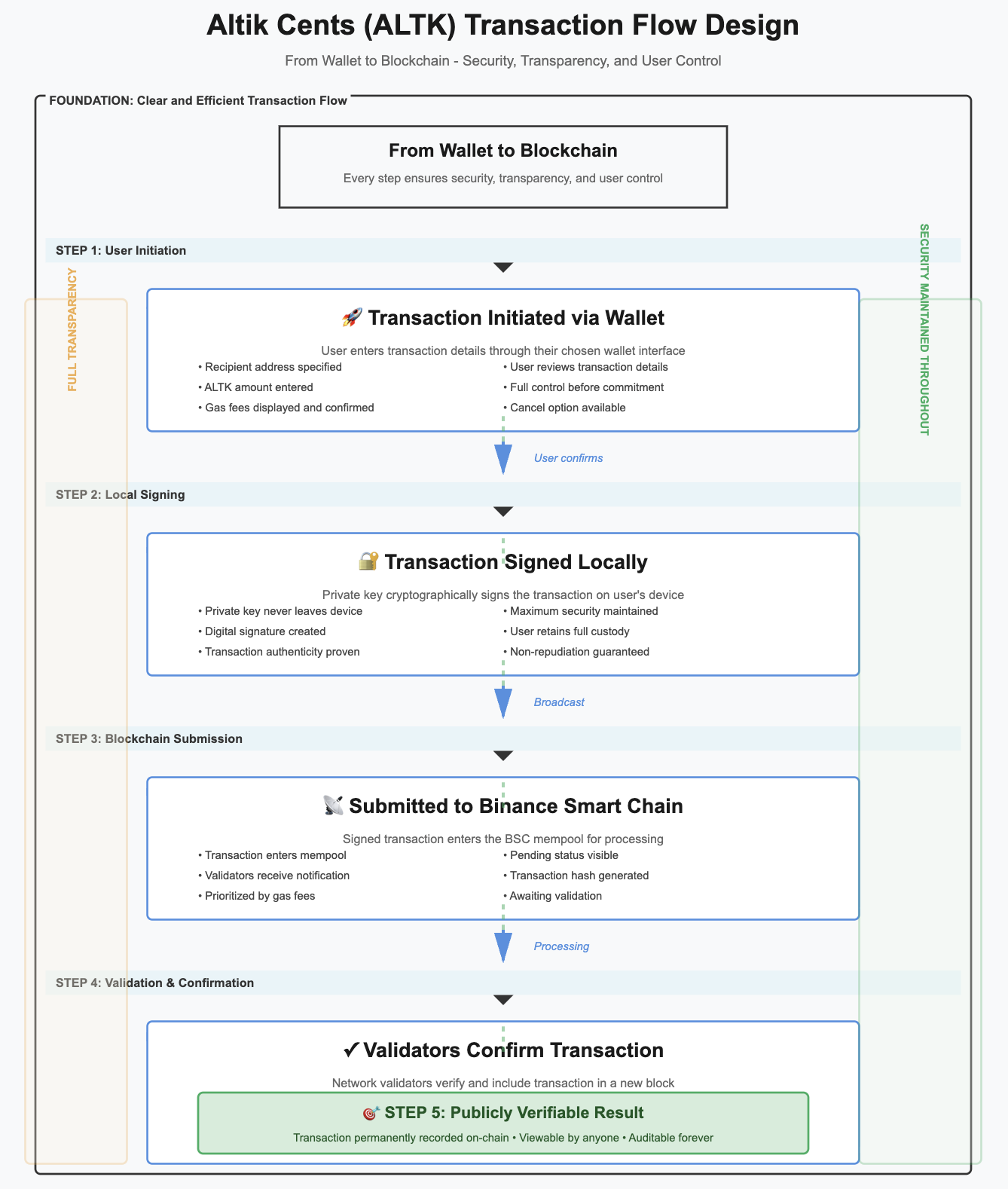
5. Transaction Flow Design - From Wallet to Blockchain
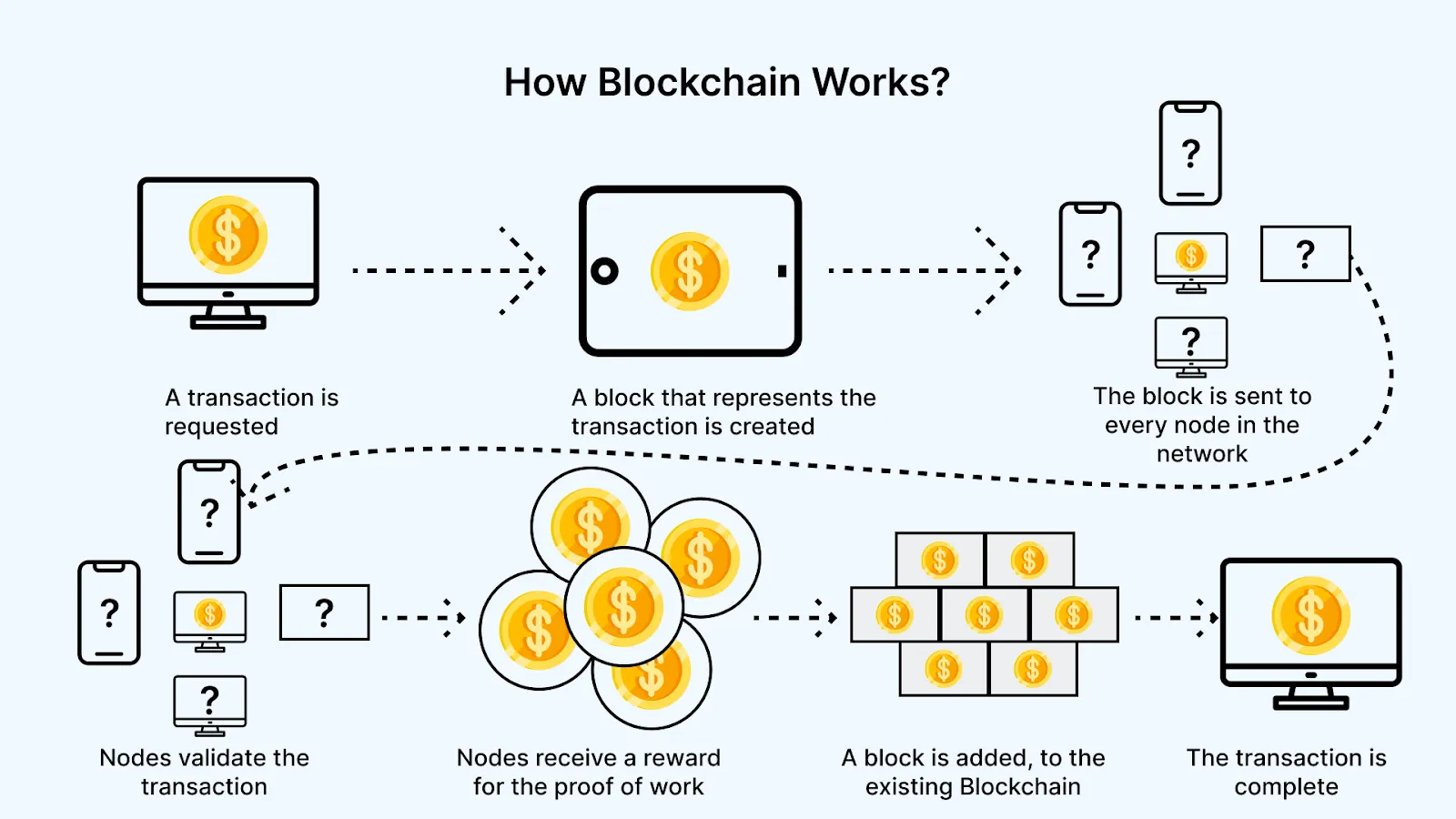
Every ALTK transaction follows a clear and efficient flow:
User initiates transaction via wallet
Transaction is signed locally
Submitted to Binance Smart Chain
Validators confirm and record the transaction
Result becomes publicly verifiable on-chain
This design ensures security, transparency, and user control at every step.
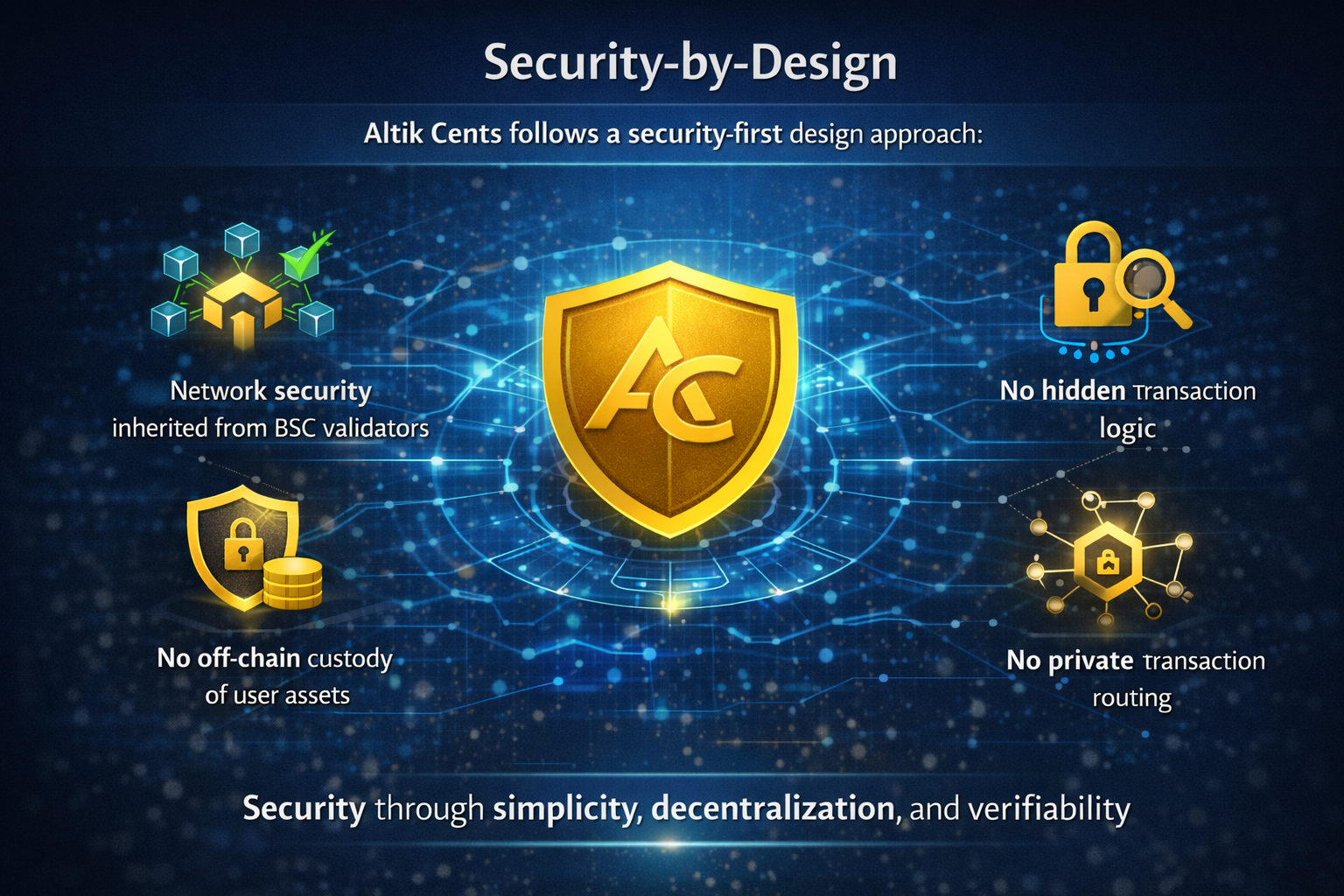
6. Security-by-Design
Altik Cents follows a security-first design approach:
Network security inherited from BSC validators
No off-chain custody of user assets
No hidden transaction logic
No private transaction routing
Security is achieved through simplicity, decentralization, and verifiability.
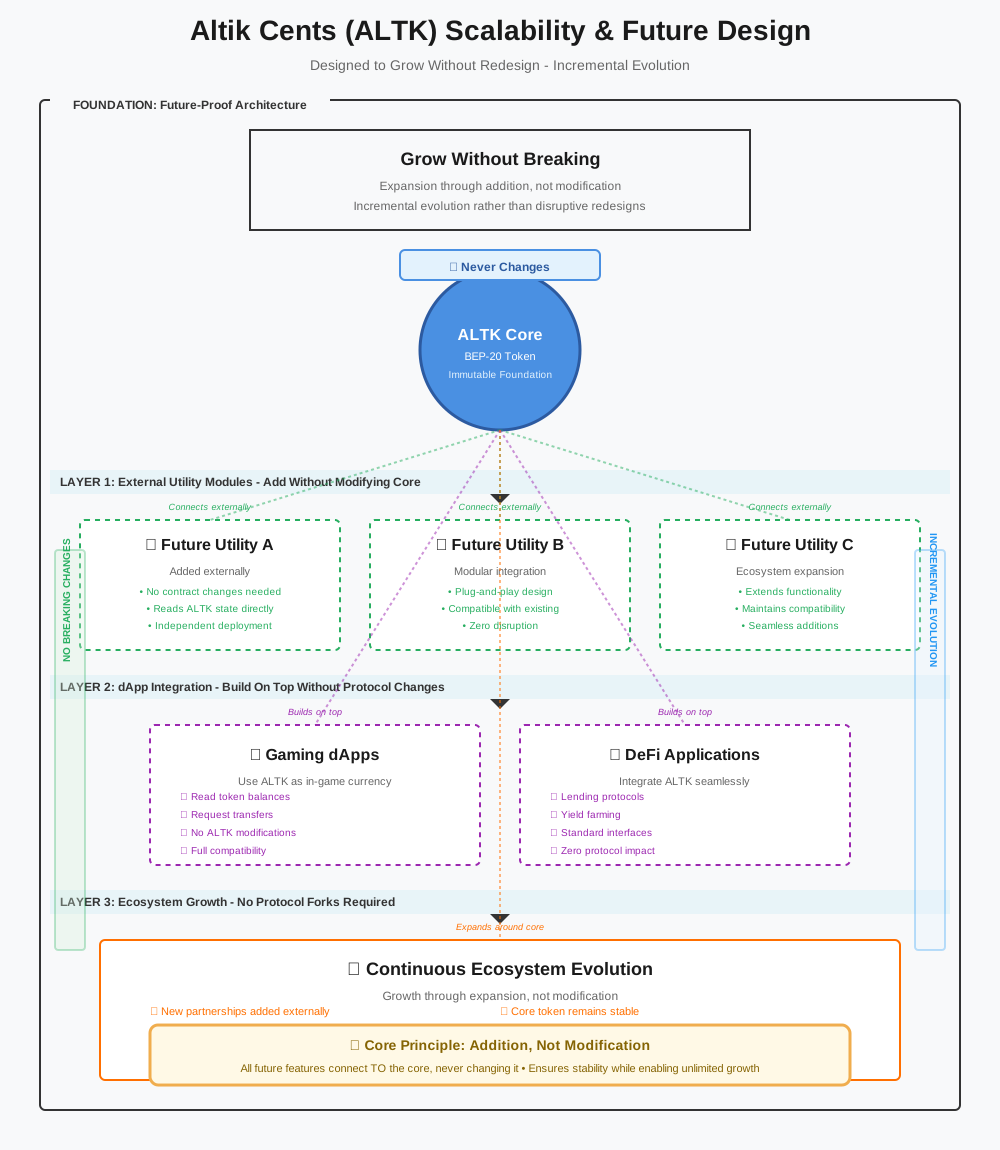
7. Scalability & Future Design - Designed to Grow Without Redesign
The ALTK architecture allows future expansion without breaking existing systems:
Utility modules can be added externally
dApps can integrate ALTK without contract changes
Ecosystem growth does not require protocol forks
This makes ALTK suitable for incremental evolution rather than disruptive redesigns.
8. Design Philosophy Summary
Altik Cents is designed around four core principles:
Simplicity: Avoid unnecessary complexity
Transparency: Everything verifiable on-chain
Interoperability: Works across wallets, DEXs, and tools
Adaptability: Ready for future ecosystem growth
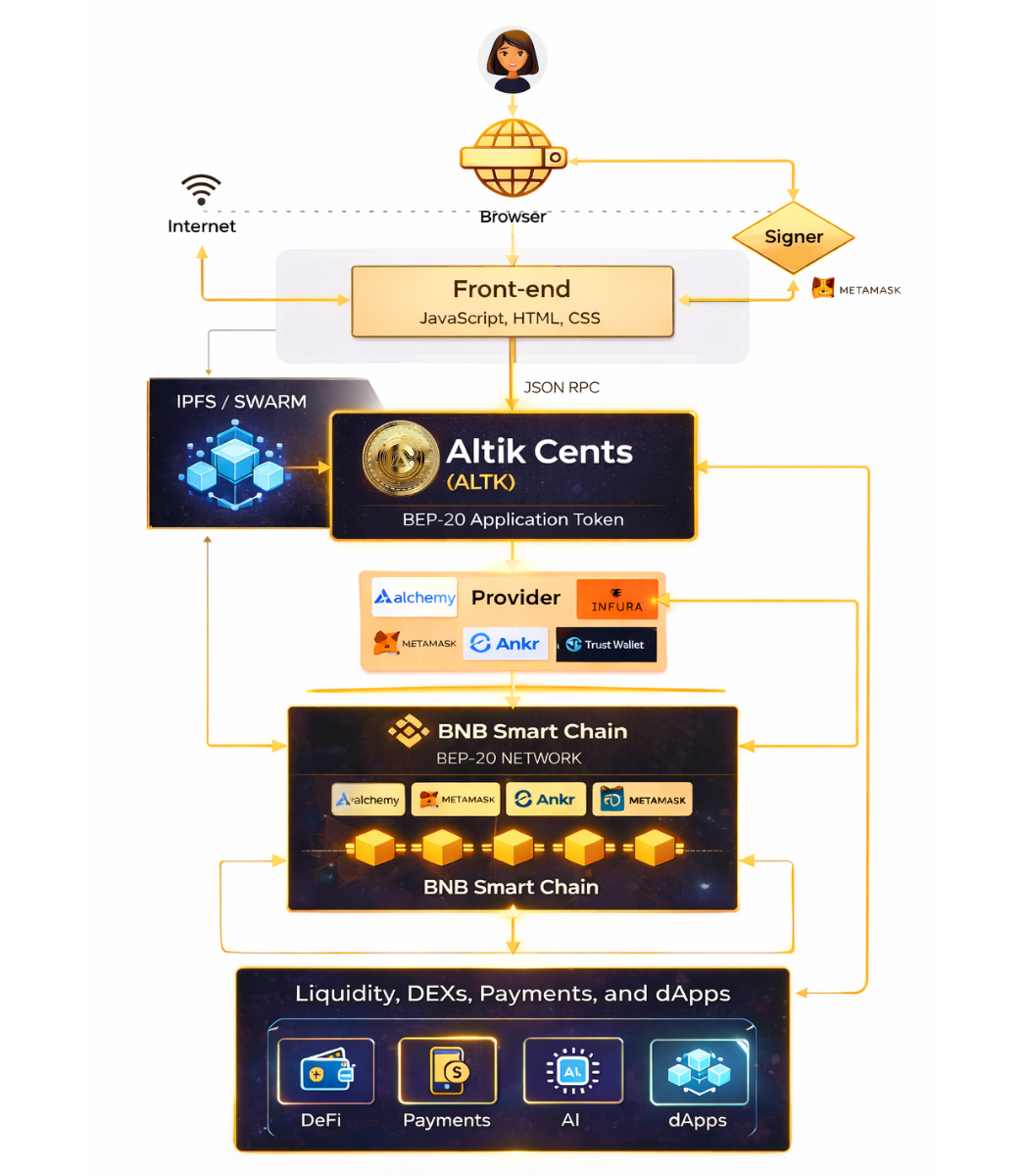
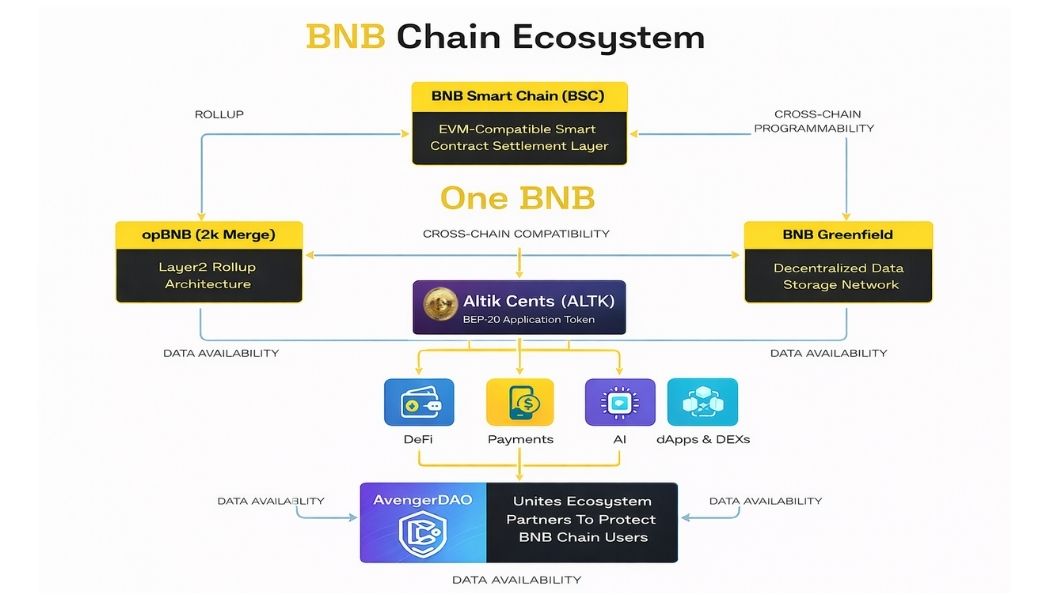
This technical design ensures that ALTK remains lightweight, flexible, and trustworthy. Altik Cents (ALTK) is an experimental BEP-20 utility token built on BNB Smart Chain, leveraging One BNB, opBNB scalability, and BNB Greenfield storage to power DeFi, payments, AI, and decentralized applications securely and efficiently.
Design is a System, Not Just an Interface
At Altik Cents, design means how technology behaves, how value flows, and how users interact with decentralized systems—not just how things look.