Alitk Cents (ALTK) Design Case Studies
Practical On-Chain Examples of Transparent Token Design
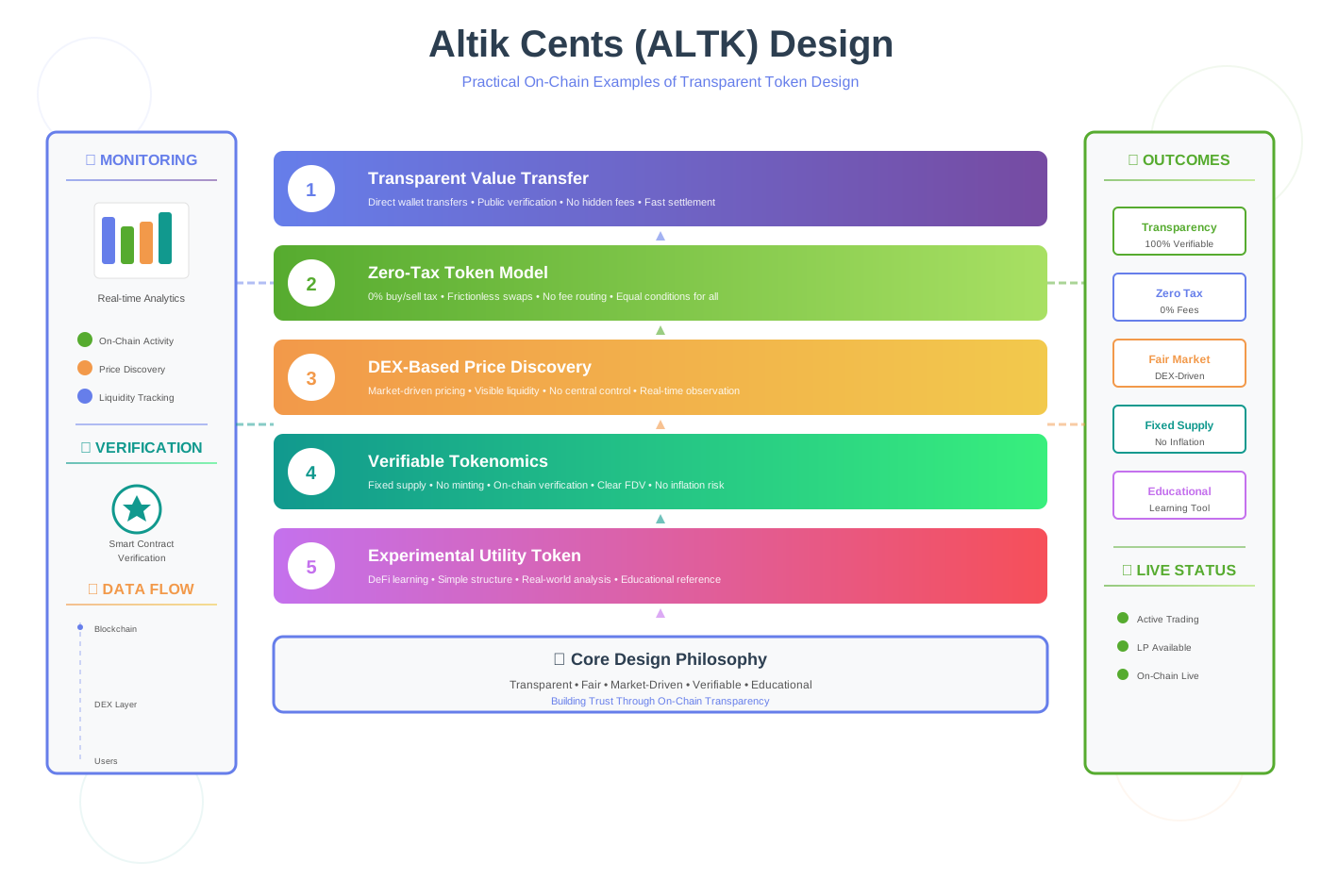
Purpose of These Case Studies
These case studies document the intentional design decisions behind Altik Cents (ALTK) and the observable on-chain behaviors those decisions enable.
They are presented as technical and educational reference examples, not as adoption metrics, usage guarantees, or investment claims. Each case highlights how minimal, verifiable token architecture can support transparency, fairness, and trust in decentralized systems.
Case Study 1: Transparent Decentralized Value Transfer
# Challenge
New participants in the crypto ecosystem often struggle to understand how value can be transferred, verified, and settled without intermediaries. Hidden fees, protocol-level deductions, and opaque mechanics frequently reduce user confidence.
# ALTK Design Approach
Altik Cents (ALTK) was designed as a simple BEP-20 token with zero transfer taxes, deployed on Binance Smart Chain. All transfers follow standard token mechanics without embedded fee logic or routing behavior.
# Observable Outcomes
Direct wallet-to-wallet value transfer
All transactions publicly verifiable on-chain
No hidden protocol-level deductions
Fast settlement with low network costs
# Key Takeaway
A minimal, transparent token design enables users to clearly observe and understand decentralized value transfer without relying on intermediaries or off-chain explanations.
Case Study 2: Zero-Tax Token Model for Fair Participation
# Challenge
Many tokens introduce buy/sell taxes that create friction for traders and liquidity providers while reducing transparency in pricing and execution.
# ALTK Design Approach
ALTK follows a 0.00% buy and sell tax model, with no transfer hooks, fee-routing logic, or privileged addresses embedded in the smart contract.
# Observable Outcomes
Frictionless swaps on decentralized exchanges
No tax erosion for liquidity providers
Pricing driven purely by market supply and demand
Equal transfer conditions for all participants
# Key Takeaway
A zero-tax model promotes fair participation and clean market mechanics by removing artificial constraints from token movement.
Case Study 3: DEX-Based Price Discovery Without Central Control
# Challenge
Centralized price controls, internal market-making, and opaque intervention mechanisms often distort true market value in token ecosystems.
# ALTK Design Approach
Altik Cents relies exclusively on DEX-based liquidity pools for price discovery. The protocol itself does not implement price stabilization, control mechanisms, or intervention logic.
# Observable Outcomes
Price determined solely by market activity
On-chain liquidity fully visible at all times
Real-time observation of market behavior
No centralized influence over pricing
# Key Takeaway
DEX-driven price discovery reinforces decentralization and aligns token behavior with core blockchain transparency principles.
Case Study 4: Verifiable Tokenomics Through On-Chain Enforcement
# Challenge
Users often cannot independently verify token supply, minting behavior, or distribution claims without trusting third-party statements.
# ALTK Design Approach
ALTK uses a fixed-supply smart contract with no mint or inflation functions. All tokenomics parameters are enforced directly at the contract level.
# Observable Outcomes
Supply transparency verifiable on-chain
No hidden minting or inflation risk
Clear fully diluted valuation (FDV) visibility
Reduced reliance on off-chain disclosures
# Key Takeaway
On-chain enforced tokenomics improve accountability by allowing anyone to independently verify supply behavior.
Case Study 5: Experimental Utility Token for Ecosystem Learning
# Challenge
Developers, researchers, and users require practical environments to study token behavior, liquidity dynamics, and decentralized trading without complex governance or opaque logic.
# ALTK Design Approach
ALTK is intentionally positioned as a minimal utility and experimental digital asset, focusing on clarity over complexity and behavior over speculation.
# Observable Outcomes
Practical learning environment for DeFi participants
Simple contract structure suitable for testing
Real-world on-chain behavior analysis
Reduced cognitive and technical overhead
# Key Takeaway
Minimal token design can serve as an effective educational and experimental reference for understanding decentralized systems.
Case Studies Summary
Altik Cents (ALTK) design case studies demonstrate:
Transparent decentralized value transfer
Zero-tax, fair participation mechanics
Market-driven DEX price discovery
Verifiable on-chain tokenomics
Responsible experimentation in Web3
Disclaimer
These case studies are provided for informational and educational purposes only.
Altik Cents (ALTK) does not guarantee outcomes, usage levels, or financial returns. Cryptocurrency involves risk, and participants should conduct independent research (DYOR) before engaging with any blockchain-based asset.